Travelogue of the Hudson
TRAVELOGUES, of recent years, have been increasingly popular on the screen. Through the eye of the motion-picture camera, all the world, and all parts of our own magnificent country, have been brought within the reach of thousands of people who have not the means to travel extensively.
Pictures, no matter how animated or faithfully colored, are after all only pictures, and but serve to whet the appetite to see in reality the scenes they present to the imagination.
Day Line Steamers are of steel construction, swift and exceptionally well appointed. They are famous for the beauty of their lines. Built entirely for first-class passengers and carrying no freight, they cater exclusively to the safety, comfort and pleasure of travelers and vacationists.
All through railroad tickets from New York to Albany, and from Albany to New York, are accepted on the Day Line, which makes it easy to make the trip a part of almost any journey. Summer vacationists find it an unsurpassed route to and from the Berkshires, the Catskills, the Adirondacks, Saratoga, Lakes George and Champlain, the Thousand Islands, Canada; all points North, East, and West.
One day trips are always popular and include excursions from New York and Yonkers to Indian Point, Bear Mountain, West Point, Newburgh and Poughkeepsie, and return. From Albany one can go to Hudson, Catskill or Kingston Point and return

Nature's Greatest "Movie"
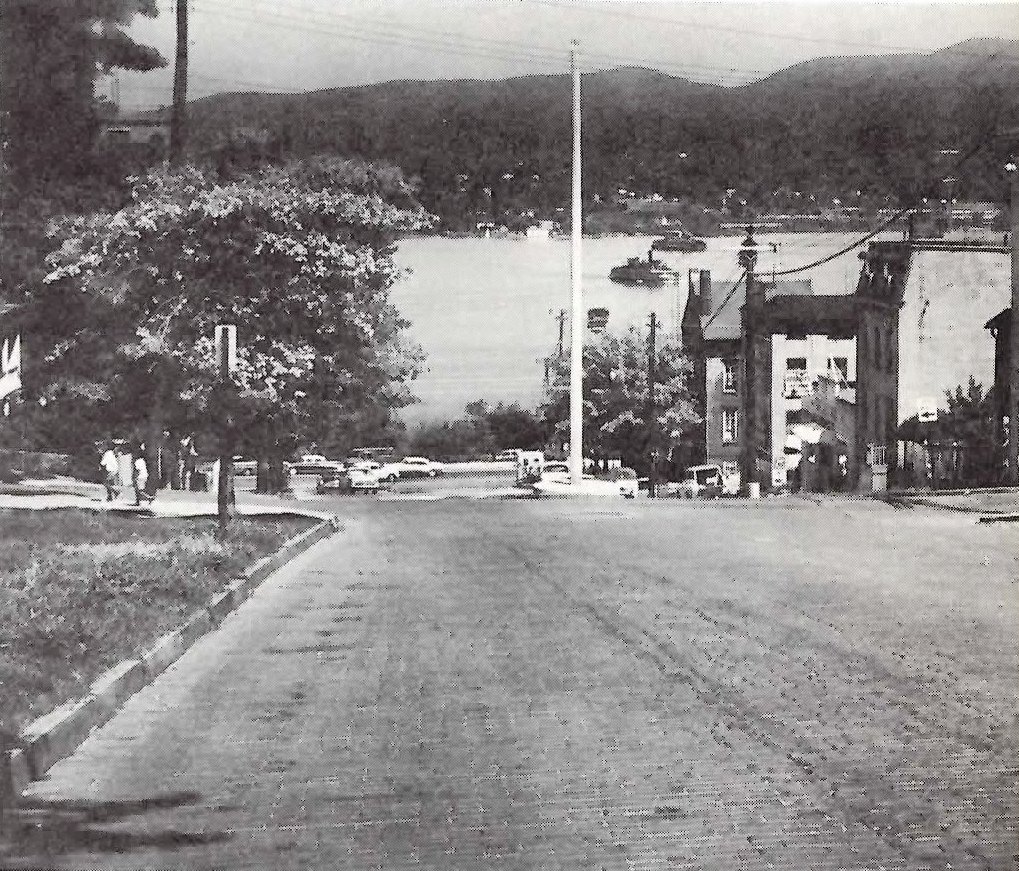
In the Hudson River, nature possesses a great living "movie." It has beauty and grandeur. On it history has laid a significant finger. Its banks are brilliant with the memories of great men. Legends and bright fancies are its heritage.
The names of five of the Day Line steamers in themselves give a suggestive resume of the Hudson's glorious past. "Hendrick Hudson" goes back to the river's earliest days in history, the days when an intrepid Englishman, employed b the Dutch East India Company, crossed the ocean in a tiny sailing craft to open this great world river to European civilization. Two centuries later came "Robert Fulton," who, in the face of ridicule and discouragement, used the Hudson's waters to first successfully apply steam power to navigation. "Peter Stuyvesant," the last of the sturdy Dutch Governors of New Amsterdam when Old New York was young, has lent his name to the newest of the Day Line Fleet. A few years later, "De Witt Clinton" raised the Hudson to new importance by making it the natural part of an inland waterway which linked the Great Lakes with the ocean. "Alexander Hamilton" is named after one of America's greatest statesmen and the founder of the financial policy of the Republic. The "Chauncey M. Depew," honors a man still a potent force in the Nation's affairs.
From an entertainment standpoint, we might consider the Day Line trip between New York and Albany a travelogue in six reels, each different and each of surpassing interest.